

By Andrew Bourke ’27 and Christopher Geitner ’27
Introduction
Tuesday marked the first major Election Day since President Trump and the Republican Party’s sweeping victories of last year. In a near reversal of fortune, the Democratic Party swept races that were largely considered a referendum on the new administration. The states of New Jersey and Virginia hold “off-year” elections for governor and other offices, which were the main spotlight of Tuesday. Eyes also turned to New York City, where the results of a three-way mayoral race could decide the future of not only the city but also the Democratic Party. The direction of the Democratic Party will be a major focus before next year’s Midterm Elections. Another factor in the Midterm Elections will be California’s Proposition 50, which passed by an overwhelming majority. While Tuesday presented a limited sample size, its effects will shape the Midterm Elections, where all 435 seats in the House of Representatives and 33 of 100 Senate seats are up for election, shaping the federal balance of power.
These races were viewed as a referendum on President Trump because they represented the first opportunity for voters to respond to his administration’s early policies and priorities. With Trump’s approval ratings declining amid concerns over the economy, a federal government shutdown, and controversies over his immigration enforcement efforts, voters used these elections to signal their satisfaction—or dissatisfaction—with the direction of his presidency. Historically, the party controlling the White House tends to struggle in off-year elections, and Tuesday’s results followed this pattern dramatically.
Nassau County
Closer to home, there were two major races in Nassau County: the County Executive and District Attorney. Incumbent Republican Nassau County Executive Bruce Blakeman defeated Democrat Seth Koslow with approximately 55% to 45% of the vote. The main issue of the campaign was Blakeman’s support for President Donald Trump. Incumbent Republican District Attorney Anne Donnelly defeated Democrat Nicole Aloise by a similar margin of 55% to 45%. The main issue of this race was the crime rate and how each candidate proposed to address it.
New York City
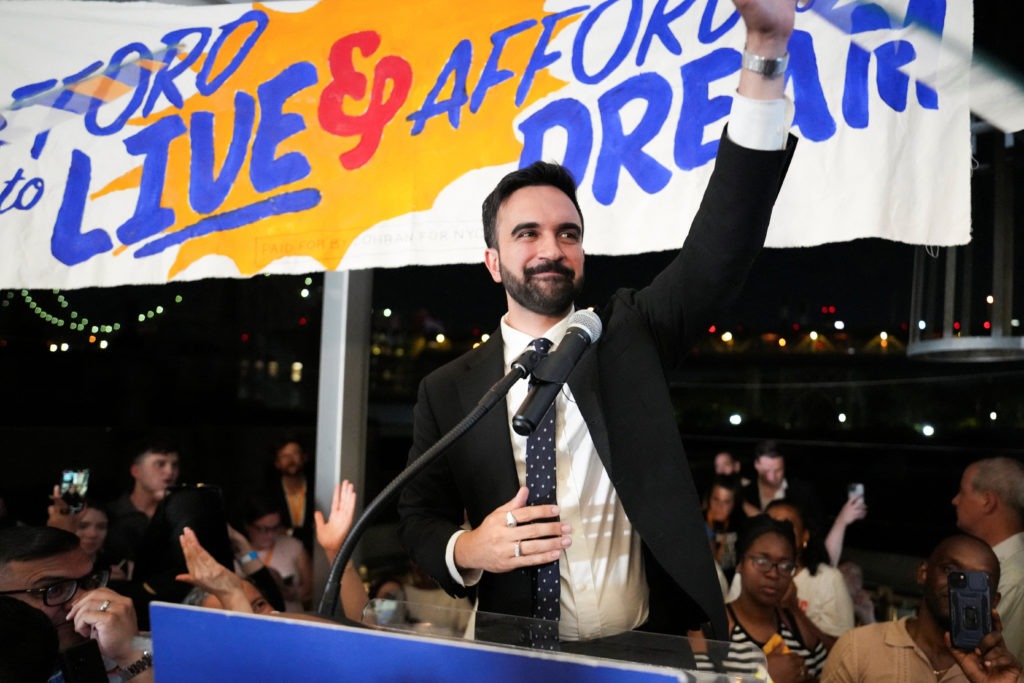
Moving to the city, Zohran Mamdani, a state representative and member of the Democratic Socialists of America, took more than half the vote in the three-way showdown for mayor of New York City. Mamdani will make history as the city’s first Muslim and South Asian mayor, as well as its youngest since 1892. The race began as a four-way contest between Republican Curtis Sliwa, the founder of the Guardian Angels, a nonprofit crime prevention organization; incumbent Mayor Eric Adams, who switched from Democrat to Independent; former Governor of New York Andrew Cuomo; and Mamdani. Eric Adams campaigned on a platform of combating antisemitism in the wake of the Gaza War and keeping New York City safe and affordable. However, his campaign was dragged down by his failure to do either of these things during his previous term and his federal indictment on charges of taking bribes and conspiring with Turkish officials. Eric Adams dropped out of the race on September 28 and endorsed Andrew Cuomo. Cuomo ran on a campaign of fighting antisemitism, increasing the size of the NYPD, raising the minimum wage, tax relief, and building 500,000 new homes. His campaign, however, was dragged down by his failures and scandals as governor. Curtis Sliwa ran on a platform of supporting the NYPD and showed some opposition to President Trump’s policies. Zohran Mamdani campaigned on a platform of free buses, government-owned grocery stores, and affordable housing. Mamdani’s victory was likely driven by the unpopularity of the other two candidates. The scandals during Cuomo’s governorship and the popularity of the Democrats in New York City likely led to this victory. The race drew historic voter engagement, with more than 2 million votes cast—the highest turnout for a New York City mayoral election since 1969.
New Jersey
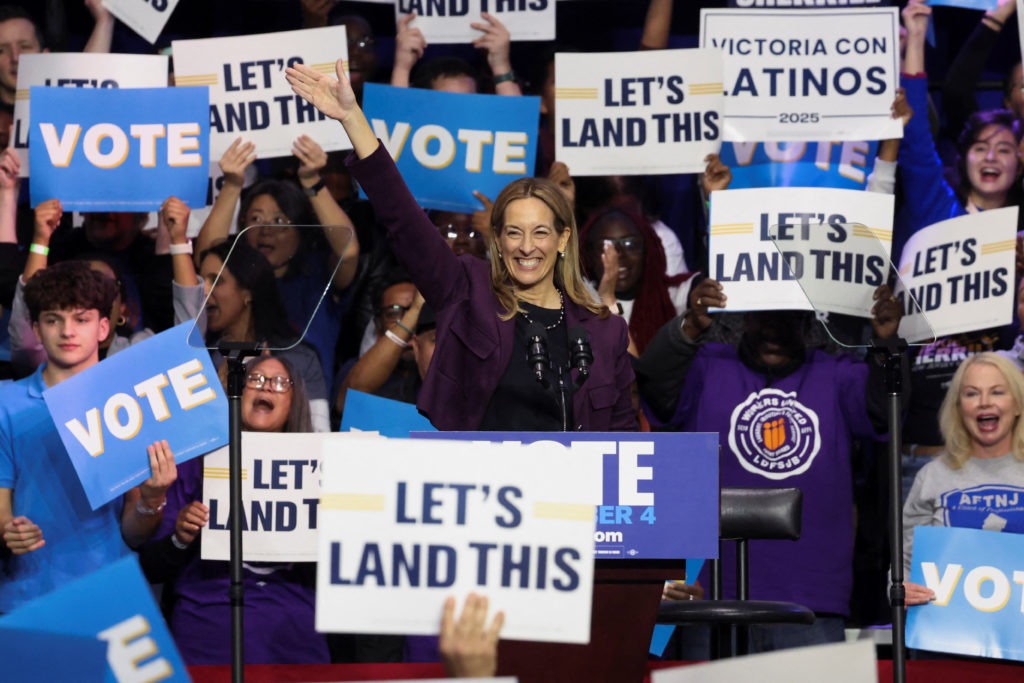
Turning to the state level, New Jersey’s election drew national attention. Unlike Virginia, New Jersey’s attorney general is appointed by the governor, though the lieutenant governor is elected on a joint ticket. The governor’s seat was open this year as incumbent Democrat Phil Murphy has served two terms, giving up the keys to the governor’s mansion in January. Two different historical trends were at play in this race, with one bound to be broken. The last time the same party won three consecutive gubernatorial elections was 1961, according to the New Jersey Globe, while the last time the governor’s seat went to the same party occupying the White House was 1985. Congresswoman Mikie Sherrill, a former Navy helicopter pilot, won a crowded Democratic Primary, while former Assemblyman Jack Ciattarelli handily won on the Republican side. Affordability and taxes, as well as public transportation and the favorability of President Trump, were the main issues voters took to the polls. Congresswoman Sherrill achieved a 13-point victory in what was projected to be a tight race. This race was a target for optimistic Republicans, given President Trump’s historic gains last year, narrowing the Democratic margin of victory down ten points from a year before. Despite not seeking the endorsement of President Trump in either his 2017 or 2021 run for governor, the endorsement of the President helped Jack win an overwhelming victory in the primary over former radio host Bill Spadea, who was aiming to appeal to the more “Trump Friendly” wing of the party. Ciattarelli’s support of the President, a move which he hoped would boost turnout among Republicans (Jack’s 2021 loss was blamed on a large number of registered Republicans who chose not to vote), might have come back to hurt him, as Fox News reports that over 70% of Sherrill voters did so to oppose the President.
Virginia
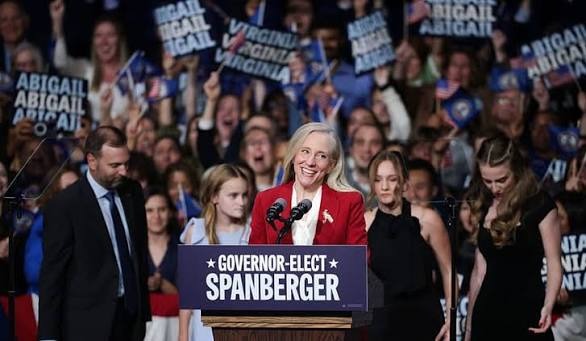
Across the region, the Commonwealth of Virginia played host to three major elections this year, including elections for the two highest statewide executive offices and the race for attorney general, the chief law enforcement official in the state. Democrat Abigail Spanberger picked up the governorship, with power transferring from the term-limited Republican Glenn Youngkin to the Democrats. Spanberger will become Virginia’s first female governor. The current Lieutenant Governor, Winsome Earle-Sears, a Republican, was Spanberger’s opponent. Spanberger’s win came as little surprise, as she was up in polls for the entirety of the race, with the only variation being in the size of the victory. Real Clear Politics (RCP) had Spanberger’s average lead going into Election Day at just over 10%, which was lower than the result—a more than 14% victory for the Democrats. The driving forces for this victory were the economy and energy prices. The second Trump Administration and federal government shutdown also loomed large over a state with approximately 300,000 federal workers. Similar to New Jersey, former President Barack Obama held last-minute rallies to turn out voters, which definitely played a role in former Congresswoman Spanberger’s 14-point victory.
Virginia also elects its lieutenant governor in a separate election from the gubernatorial race. Ghazala Hashmi won the race with 55% of the vote to Republican John Reid’s 44%, setting up control of the executive branch of the state for the Democratic Party. When one party controls both the governorship and the state legislature, as Democrats now do in Virginia, it is called a trifecta, which gives that party significant power to advance its policy agenda.
Another race to watch was the Virginia Attorney General’s race, where Democrat Jay Jones defeated incumbent Republican Jason Miyares by a 7-point margin. The victory came amid backlash over text messages Jones had sent concerning the families of former Virginia House Speaker Todd Gilbert. In a race that appeared to have Jones winning early on, the messaging scandal flipped the race into the tossup column, with RCP polls showing multiple leads for each candidate and some ties. Jones was able to pin Miyares down to President Trump, arguing that that connection was worse than his texting history. Jones’ victory sealed the deal on a Democratic sweep of major races on Election Day.
California
On the West Coast, another issue to shake next year’s midterm is the current redistricting battle, involving multiple states and efforts to redo congressional district apportionment to gain more seats for either party. “Mid-cycle redistricting” refers to the practice of redrawing congressional district maps between the regular ten-year redistricting cycles that follow each census. The Democratic Party has repeatedly argued against “mid-cycle redistricting,” calling it an attempt by the Republicans to hold onto their narrow and vulnerable majority in the House of Representatives. The Republicans have argued that this redistricting is necessary to combat the existing maps drawn by Democratic states like Illinois, and that the current map was based on a flawed 2020 census.
Proposition 50, also known as “Prop 50” or the “Election Rigging Response Act,” aims to draw five more Democratic seats into the state by redrawing the current map to consolidate Republican votes into certain seats. According to NBC News, the measure passed with more than 60% of the vote. This gives lawmakers the ability to redraw the map, which will shape other states’ redistricting measures.
Conclusion
In the first major contest during the second Trump Administration, Democrats rallied to sweep major races watched nationwide, the only silver lining being the Republican victories on Long Island. Democrats were energized, calling the victories a rejection of Trump and his policies. The races also relieve a Democratic Party that suffered historically low approval ratings earlier this year, according to a March CNN Poll. The RCP average currently has Democrat approval in the mid-30s and low-40s, down from a Fox News estimate of the party breaking even on election night. Republican Party approval is only slightly higher than that of Democrats, according to Gallup Polls, and a Quinnipiac University poll found blame for the current government shutdown tends to fall on Republicans. This blame loomed large in the races last Tuesday.
Republicans passed off the election night results, noting how the races occurred in Democrat-favorable states and districts. While these races were projected to go blue, the Democrats did outperform polls on the margin of victory, signaling a potential revamp of the party. Republicans also noted how they seemed to underperform and that a change in messaging might be necessary to secure victory in next year’s Midterm Elections. While still a year away, next year’s elections will determine the legislative abilities of the administration and will likely have impacts on the next presidential election.


 Tarmac Online
Leave a comment