
By: Ryan Manno ’27
This NFL season has been nothing short of electrifying, from breakout wide receiver dominance to surprise rookie performances and inspiring bounce backs. After a full look at the film, here are my picks for the biggest awards.
Photo Credit: USA Today Network
Most Valuable Player (MVP)
Matthew Stafford has been one of the most consistent quarterbacks of the 2025 season. At 37 years old, he delivered the best statistical campaign of his career, leading the league with 46 touchdown passes while eclipsing 4,700 passing yards. What makes this season even more remarkable is the context that many believed Stafford was nearing the twilight of his career. Instead, he proved the critics wrong and authored one of the most impressive veteran resurgences in recent memory. In the process, he climbed into 7th place on the NFL’s all-time list for career touchdown passes, further cementing his legacy.
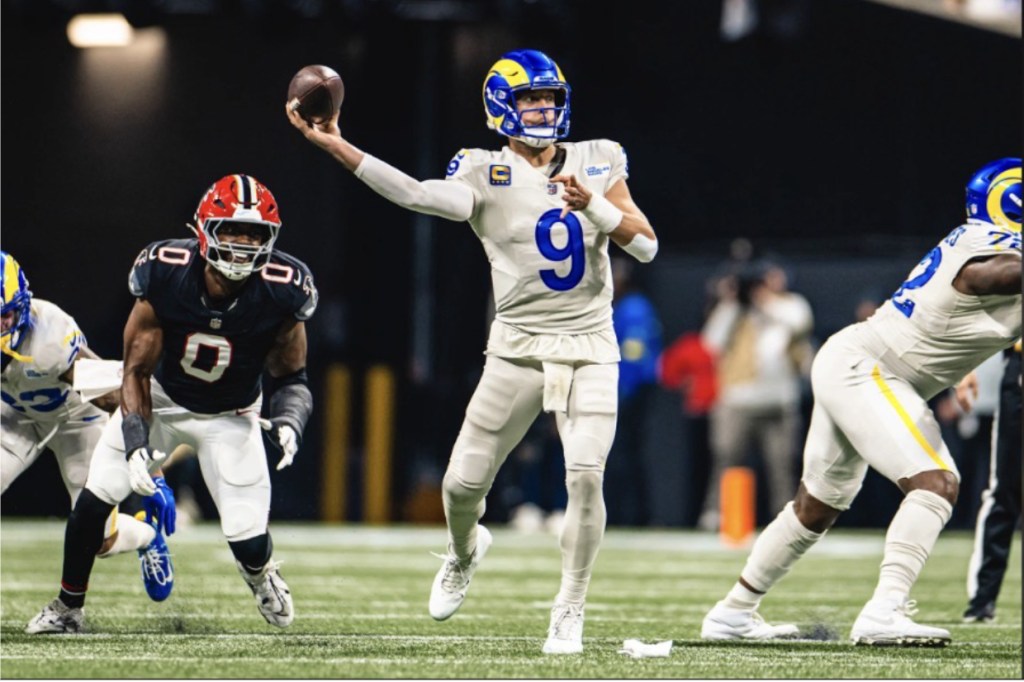
Photo Credit: Los Angeles Rams / NFL Photos
Stafford’s value extended far beyond the box score. He was the engine behind the league’s most explosive offense, guiding the Rams to first in total yards per game (394.6) and first in total points scored (518). His command of Sean McVay’s system and his willingness to attack tight windows consistently put Los Angeles in scoring position. Week after week, Stafford was the stabilizing force that made the Rams one of the most feared teams in football.
That said, Drake Maye made this race extremely competitive. The Patriots quarterback took a massive leap in his sophomore season, posting career highs across the board with 31 passing touchdowns while adding four more on the ground. What truly separated Maye was his efficiency, as he threw just eight interceptions and led the league with a 72% completion percentage. His improved decision-making and poise turned New England into a legitimate threat, making him one of the strongest MVP challengers.
Trevor Lawrence also deserves recognition. His name has been firmly planted in the MVP conversation for good reason. Lawrence delivered the best season of his career, leading the Jaguars to a 13-win campaign and the AFC’s 3 seed. He threw for a career-high 29 touchdowns and added nine more with his legs, showcasing his dual-threat ability and leadership in crucial moments. This was the season that solidified him as one of the league’s premier quarterbacks.
Few analysts predicted Stafford would be in the MVP conversation entering the year, let alone leading it. But his week-to-week dominance, control of the league’s top offense, and ability to elevate everyone around him made his case undeniable. While Maye and Lawrence represent the future of the position, 2025 belonged to Stafford, and that’s why he gets my MVP vote.
Offensive Player of the Year (OPOY)
Jaxon Smith-Njigba didn’t just break out this season, he exploded into superstardom. The Seahawks wideout racked up nearly 1,800 receiving yards and 10 touchdowns, leading the entire NFL in yards while setting multiple franchise records along the way. His ability to generate explosive plays was unmatched, highlighted by a league leading eight receptions of 40+ yards. Every time Seattle needed a spark, JSN delivered.
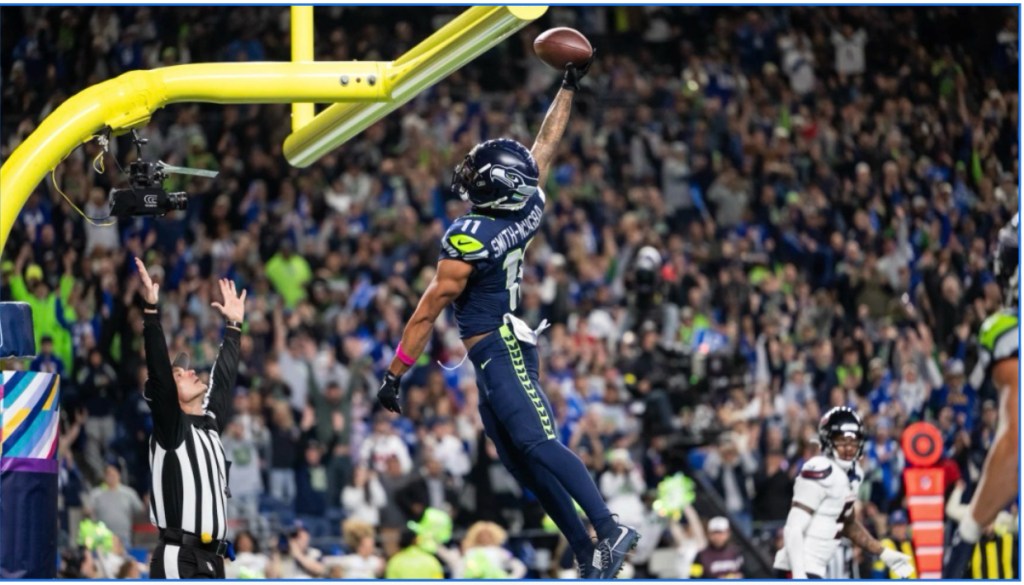
Photo Credit: Seattle Seahawks / NFL Photos
What truly separates Smith-Njigba on the field was his impact on winning. He wasn’t just piling up stats, he was warping defensive game plans, drawing double coverage, and opening up the field for the rest of the offense. His presence gave Seattle the firepower they needed to surge to the NFC’s 1 seed, turning them into one of the most dangerous offensive forces in the league.
Behind him, Puka Nacua quietly put together another elite campaign. He posted career highs in receptions (129), targets (166), receiving yards (1,715), and total touchdowns (11), all while dominating advanced metrics like yards per route run and expected points added. While his season may not have had the same jaw-dropping moments as JSN’s, his consistency and efficiency was elite.
George Pickens was the biggest surprise of the race. After being traded from Pittsburgh to Dallas, many expected him to be overshadowed by four-time Pro Bowler CeeDee Lamb. But when injuries sidelined Lamb for extended stretches, Pickens took advantage of the opportunity. He shattered his previous career highs, finishing with 93 receptions, 1,429 yards, and nine touchdowns. His physicality, contested-catch ability, and deep-threat presence made him an immediate contributor for the Cowboys’ offense.
Christian McCaffrey’s season also deserves praise. After injuries derailed most of his 2024 campaign, some questioned whether he could return to his elite form. He silenced all doubts. McCaffrey became the league’s most versatile offensive weapon once again, posting 1,202 rushing yards, 924 receiving yards, and 17 total touchdowns. At 29 years old, he proved he is still one of the most complete players in all of the league.
No one expected Jaxon Smith-Njigba to rise into elite status this quickly, but his dominance, especially in the first half of the season, made him an undisputed star. While Puka’s efficiency, Pickens’ breakout, and McCaffrey’s comeback all deserve praise and recognition, JSN’s explosiveness and his direct impact on Seattle’s rise to the NFC’s top seed give him the edge. For me, he is the Offensive Player of the Year.
Defensive Player of the Year (DPOY)
This award was essentially a no-brainer. Myles Garrett was the most dominant and disruptive defensive force in football from start to finish. He set the single-season sack record with 23, a milestone that voters historically reward, but his impact went far beyond just raw numbers.

Photo Credit: Cleveland Browns / NFL Photos
Garrett didn’t just beat offensive linemen, he dictated entire game plans. Opposing offenses were forced to slide protection his way, keep tight ends in to block, and call quicker-developing plays just to survive. Even on snaps where he didn’t record a sack, his pressure collapsed pockets, forced rushed throws, and created opportunities for his teammates.
What separated Garrett from the rest of the field was his consistency. Week after week, he was the most feared player on the defensive side of the ball. Whether it was late-game situations, third-down stops, or momentum-swinging plays, Garrett was always involved.
Defensive Player of the Year isn’t just about numbers, it’s about dominance. Myles Garrett didn’t just lead the league, he controlled it. His historic sack total, combined with his ability to completely alter how offenses functioned week after week, made him the clear and deserving choice.
Offensive Rookie of the Year (OROY)
This rookie class was electric and one of the most entertaining in recent memory. After a two-touchdown performance in Week 1, many believed Tampa Bay wideout Emeka Egbuka was going to run away with the award. However, the race quickly tightened. Following a three-touchdown explosion against a division rival, Giants running back Cam Skattebo burst into the Rookie of the Year conversation, alongside his quarterback, Jaxson Dart, who bursted into the scene with five straight rushing touchdowns for New York.
As the season progressed, new names continued to emerge. By midseason, Patriots running back TreVeyon Henderson caught fire, scoring five total touchdowns in just two games and becoming a centerpiece of New England’s offense. Meanwhile, Panthers rookie wideout Tetairoa McMillan began to heat up, tallying five receiving touchdowns over a five game stretch and establishing himself as a reliable red zone threat for Carolina.
The hottest name late in the year, though, was 26-year-old rookie quarterback Tyler Shough in New Orleans. Shough, who entered into a starting role on a struggling 1–7 Saints team, immediately put life into the offense. His ability to make plays both through the air and on the ground transformed the Saints into a fast-paced unit, helping them win four of their final five games.
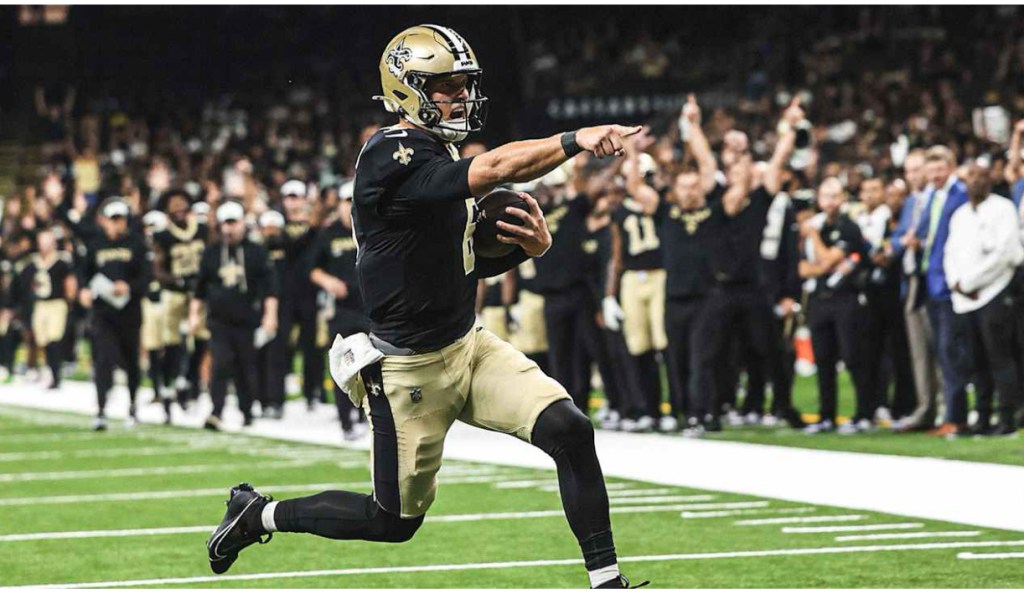
Photo Credit: Michael C. Hebert / New Orleans Saints
Although McMillan was the most consistent rookie throughout the season, I am giving the award to Tyler Shough because of his immediate impact. Few rookies completely changed the trajectory of their team and let alone their city in the way Shough did, turning a struggling offense into one of the league’s most exciting late season stories.
Defensive Rookie of the Year (DROY)
Entering the season, many believed this award had already been decided. Highly scouted prospects like Abdul Carter and Travis Hunter dominated preseason headlines, and most fans assumed one of them would easily walk away with Defensive Rookie of the Year. But as the season progressed, it became clear that the most consistent and impactful rookie defender wasn’t the most hyped, it was Carson Schwesinger.
Schwesinger entered into a meaningful role early in the year and never gave it back. Playing within one of the league’s most physical defensive systems alongside Myles Garrett, he quickly established himself as a reliable presence against the run while also holding his own in coverage. His natural instincts and tackling ability immediately stood out, especially for the rookie.
What separated Schwesinger from the rest of the rookie class was his consistency. While others had flashes in bursts, he delivered steady production week after week. When Cleveland needed a stop, he was often in the middle of the action, making smart reads that don’t always show up on the stat sheet.
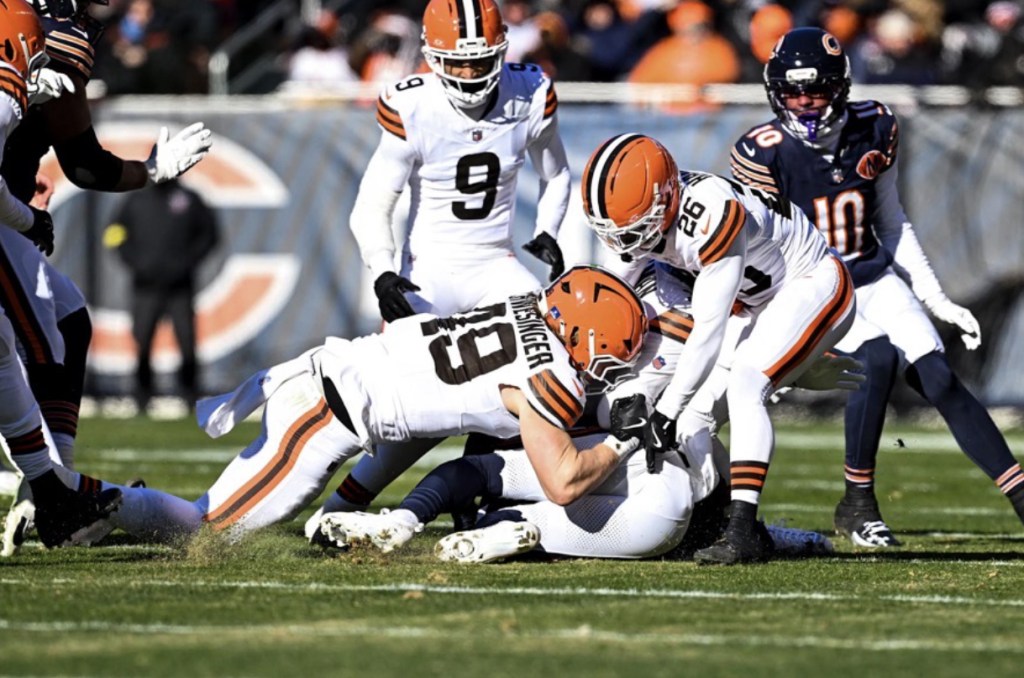
Photo Credit: Matt Starkey / Cleveland Browns
Defensive Rookie of the Year is often driven by hype, but this season it was earned through week after week, consistent performance. While Carter and Hunter carried the preseason spotlight, Schwesinger quietly outplayed expectations. He didn’t just emerge, he took control of the race.
Comeback Player of the Year (CPOY)
Christian McCaffrey’s 2025 season stands as one of the most impressive bounce backs in recent NFL memory. After injury concerns clouded expectations and derailed much of his previous campaign, McCaffrey returned with something to prove, and he delivered in a dominant manner. He surpassed 2,000 scrimmage yards and reestablished himself as one of the most versatile and dangerous offensive weapons in football.
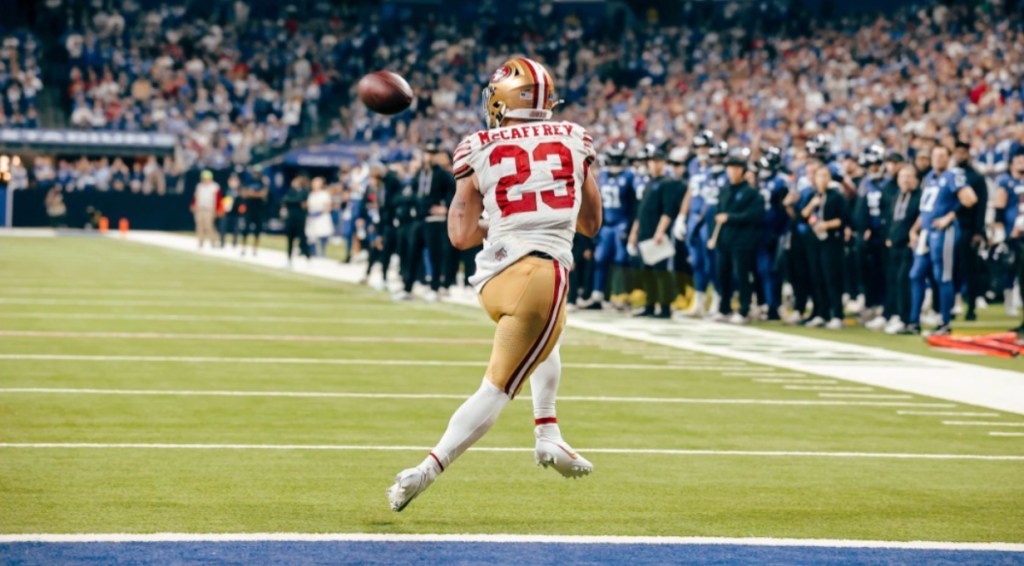
Photo Credit: Kym Fortino / San Francisco 49ers
What made McCaffrey’s comeback so special wasn’t just the production, it was the reliability. Week after week, he was the engine of San Francisco’s offense, impacting games as both a runner and a receiver. His versatility forced defenses to constantly adjust, making him the centerpiece of one of the league’s most dynamic units.
Trevor Lawrence also reentered the national spotlight after a disappointing prior season, responding with his most complete year. He led Jacksonville back into contention with improved efficiency, stronger leadership, and consistent late game execution, something he has struggled with throughout his career. His resurgence made him a legitimate candidate in this race.
Philip Rivers’ unexpected return added one of the most fascinating storylines of the season. After years away from the league, Rivers stepped back onto an NFL field for the Indianapolis Colts, and showed he could still command an offense, bringing veteran presence and football IQ to a locker room that needed stability. While his numbers didn’t match the others, the storyline of returning at his age and remaining competitive made his case worth noting.
Chris Olave, meanwhile, overcame health setbacks to post another 1,000-yard season, reminding the league why he is one of the premier young receivers in football. His ability to excel after adversity kept him firmly in the CPOY discussion.
Comeback Player of the Year is about perseverance and reestablishing yourself on the biggest stage. McCaffrey didn’t just return, he reclaimed his spot among the league’s elite. While Lawrence, Rivers, and Olave all had unique, inspiring journeys, McCaffrey’s return to dominance made his story the most powerful of them all, which is why he earns this award.
Final Thoughts
The 2025–2026 NFL season delivered everything fans could ask for, historic statistical milestones, unexpected breakouts, and unforgettable storylines that made it truly a must watch. From Jaxon Smith-Njigba’s rise to receiver superstardom, to Matthew Stafford’s improbable MVP resurgence, to the late season surge of rookie talent and Christian McCaffrey’s comeback to dominance, this year captured the full picture of what makes the NFL special. No matter what kind of fan you are, this season had something that stuck with you.


 Tarmac Online
Leave a comment